
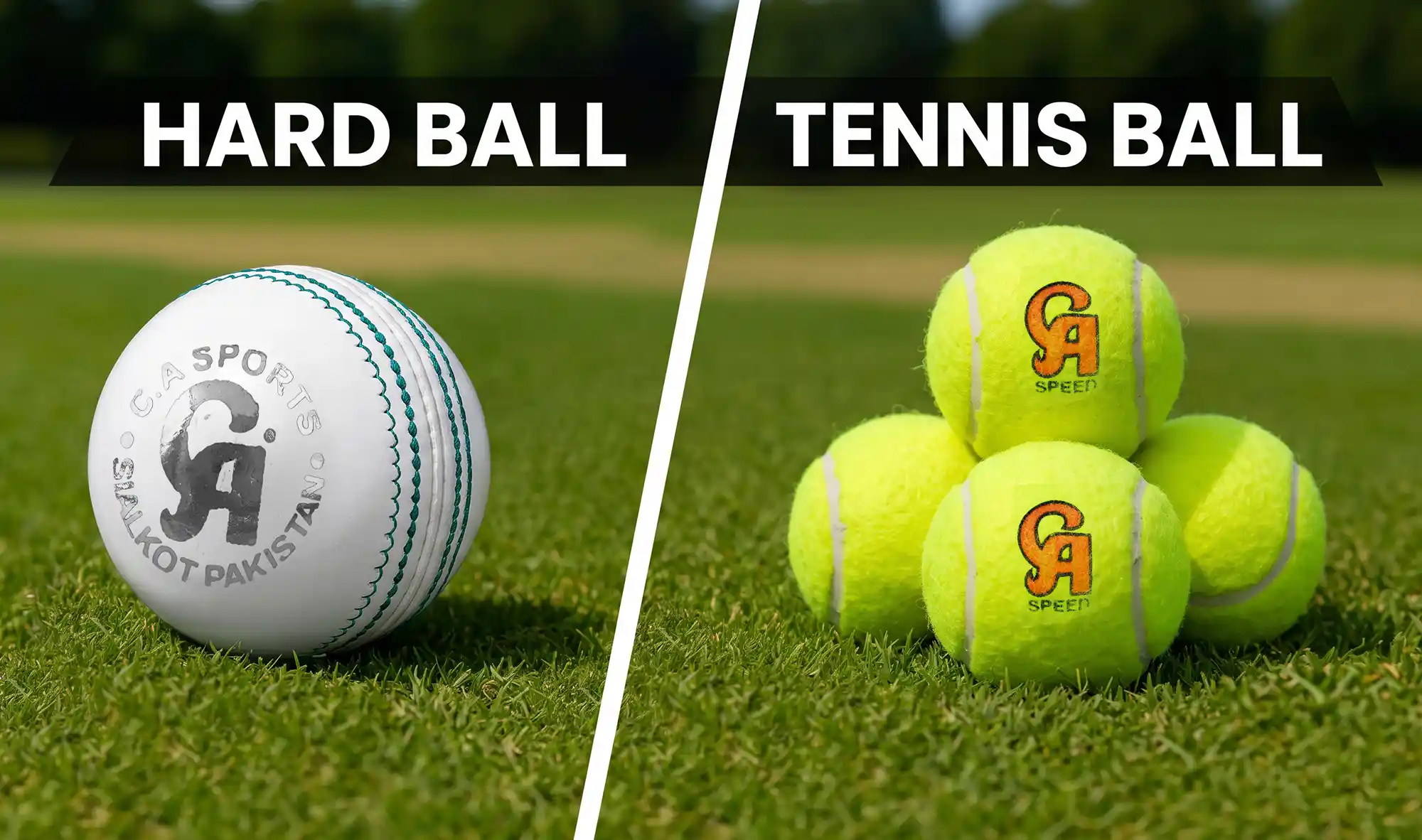
Hard Balls vs Tennis Balls: A Complete Comparison Guide
Most cricketers in Pakistan learn the game with a tennis ball on a street corner long before they ever hold a leather ball. Hard ball cricket comes later, once footwork and timing are already in place. Both formats teach real skills, but they call for different balls, different bats, and very different safety gear. Buying the wrong combination often means an unplayable bat, a bruised hand, or gear that never gets used. This guide breaks down the practical differences so you buy the right equipment for the format you actually play.
What Is a Hard Cricket Ball?
A hard cricket ball is the official ball used in club, school, and professional matches. It has a solid core wrapped in tightly stitched leather, which gives it a firm, heavy feel and a raised seam. Bowlers use that seam to generate swing through the air and grip off the pitch, while batters face a ball that moves fast and bounces predictably on a proper surface.
Because it travels quickly and doesn't give on impact, a hard ball can genuinely injure an unprotected hand, body, or head. That firmness is also exactly what allows a fast bowler to hit real pace and a batter to time a shot properly rather than push at a soft, unpredictable ball. CA International's range of Cricket Hard Balls covers this end of the game, including match-grade options built for turf pitches and league fixtures.
What Is a Tennis Ball in Cricket?
Street and backyard cricket usually starts with a plain tennis ball. It's light, soft, and forgiving, which makes it easy to learn on. Many players go a step further and wrap that tennis ball tightly in electrical tape to create a tape ball. The tape adds weight and smooths the surface, so the ball swings more and moves faster through the air than a bare tennis ball, while still stinging far less than leather on contact.
CA International lists this category as Soft Balls, with packs built specifically for tape ball and softball games across different skill levels.
Key Differences at a Glance
| Feature | Hard Cricket Ball | Tennis Ball / Tape Ball |
|---|---|---|
| Construction | Cork core, stitched leather cover | Rubber core, felt cover, often taped |
| Weight | Heavier | Lighter |
| Firmness | Very firm | Soft and flexible |
| Pace | Supports genuine bowling speed | Slower and easier to handle |
| Swing | Realistic seam movement | Limited, though tape adds some swing |
| Safety needs | Full protective kit required | Minimal gear needed |
| Best for | Matches and serious training | Beginners, street cricket, casual games |
The Bat Matters as Much as the Ball
Pairing the wrong bat with the wrong ball is a common and costly mistake. A hard leather ball needs a thick, solid bat that absorbs the impact without cracking or stinging your hands on contact. This is where English willow bats do their job, built with the weight and profile to control a genuine cricket ball at speed.
Tape ball cricket rewards a different skill entirely: bat speed. Because the ball is lighter, Tapeball Bats are built thinner and lighter, often with a longer handle that gives extra leverage for big hits in street matches.
Safety Gear: Where the Two Formats Really Diverge
This is the clearest practical difference between the two forms of the game.
Playing with a hard ball calls for a full kit:leg pads to protect the shins and knees, batting gloves to protect the fingers, a helmet for head and face protection against fast bowling, and an abdominal guard, which is essential at any serious level.
Tennis ball and tape ball cricket need far less. Most players use just a bat and the ball itself, sometimes adding thin gloves for grip. Pads and helmets rarely come out for a street game, since the injury risk is much lower with a soft ball.
Which Ball Should Beginners Use?
New players, especially children, do best starting with a tennis ball or tape ball. It gives them time to judge line and length, build footwork, and get comfortable at the crease without fearing every delivery. A soft ball also lets a young player fail safely, which matters more for long-term technique than most parents realize. Coaches and parents can introduce a hard ball gradually once basic technique is solid and the player is ready for full protective gear.
Which Ball Do Professionals and Serious Players Use?
Club, school, and professional cricket use hard balls exclusively, and for good reason. No other ball reproduces the seam movement, bounce, and pace that competitive batting and bowling technique are built around. A batter who only ever faces a soft ball never learns to play genuine short-pitched bowling or handle real swing, and a bowler never learns to control seam position at pace. Players preparing for turf cricket should make hard-ball practice a regular part of training, even if tape-ball games remain part of how they enjoy the sport socially.
Final Word
Neither format beats the other; they simply serve different purposes. Tennis ball and tape ball cricket build confidence and reflexes with almost no barrier to entry. Hard ball cricket turns that foundation into real technique, played with the gear the sport was actually designed around. Whichever format you're gearing up for, the CA Sports Customer Care team can help you match the right ball, bat, and protective gear to your level of play.
FAQs
Is tennis ball cricket good practice for hard ball cricket?
It sharpens reflexes, hand-eye coordination, and basic technique, but it doesn't prepare a player for the pace, bounce, and seam movement of a real leather ball. Treat it as useful support, not a replacement for hard ball practice.
Do I need pads and a helmet for tape ball cricket?
Usually not. Since the ball is much softer than leather, most tape ball players skip pads and helmets and play in ordinary sports clothing.
What is the difference between a tape ball and a plain tennis ball?
A tape ball starts as a standard tennis ball, then gets wrapped tightly in electrical tape. This makes it heavier and faster through the air than a plain tennis ball, while staying far safer than a hard leather ball.
Can I use a hard ball bat for tape ball cricket?
You can, but it isn't ideal. Hard ball bats are heavier and built for a different kind of impact, which slows your swing in a format built around bat speed. A dedicated tapeball bat suits the job better.
What age should a child move from tennis ball to hard ball cricket?
There's no fixed rule, but most coaches wait until a young player has solid basic technique and enough strength to wear full protective gear comfortably, often around 13 to 15 years old.
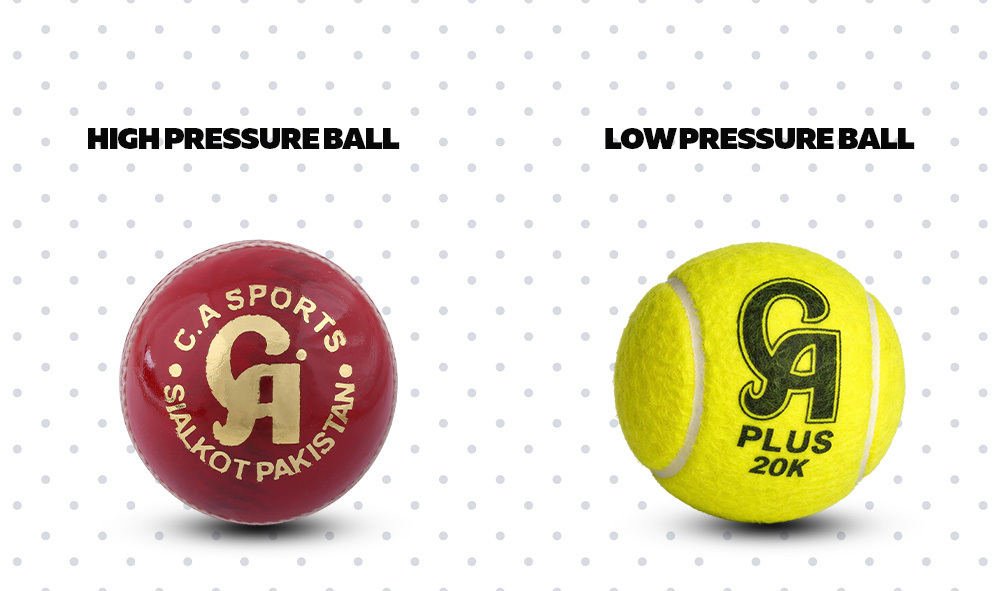
Hard balls vs tennis balls comparison guide. Learn the key differences in bounce, pace, swing, safety, cost, and best use for practice, street cricket, and matches.

Recent Blog
05 Sep 2026
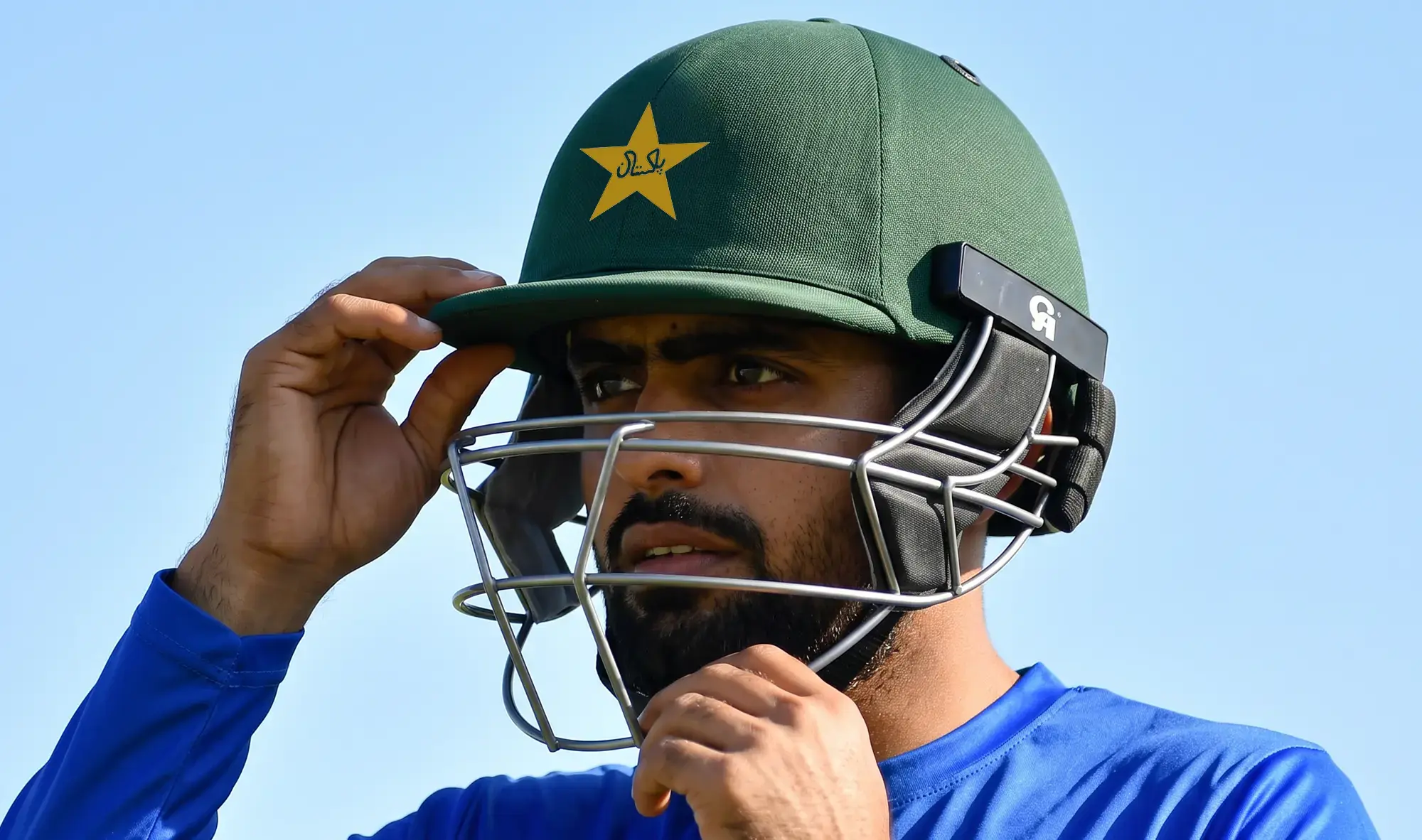
How to Choose the Best Cricket Helmets with Advanced Face Guard Technology
31 Aug 2026
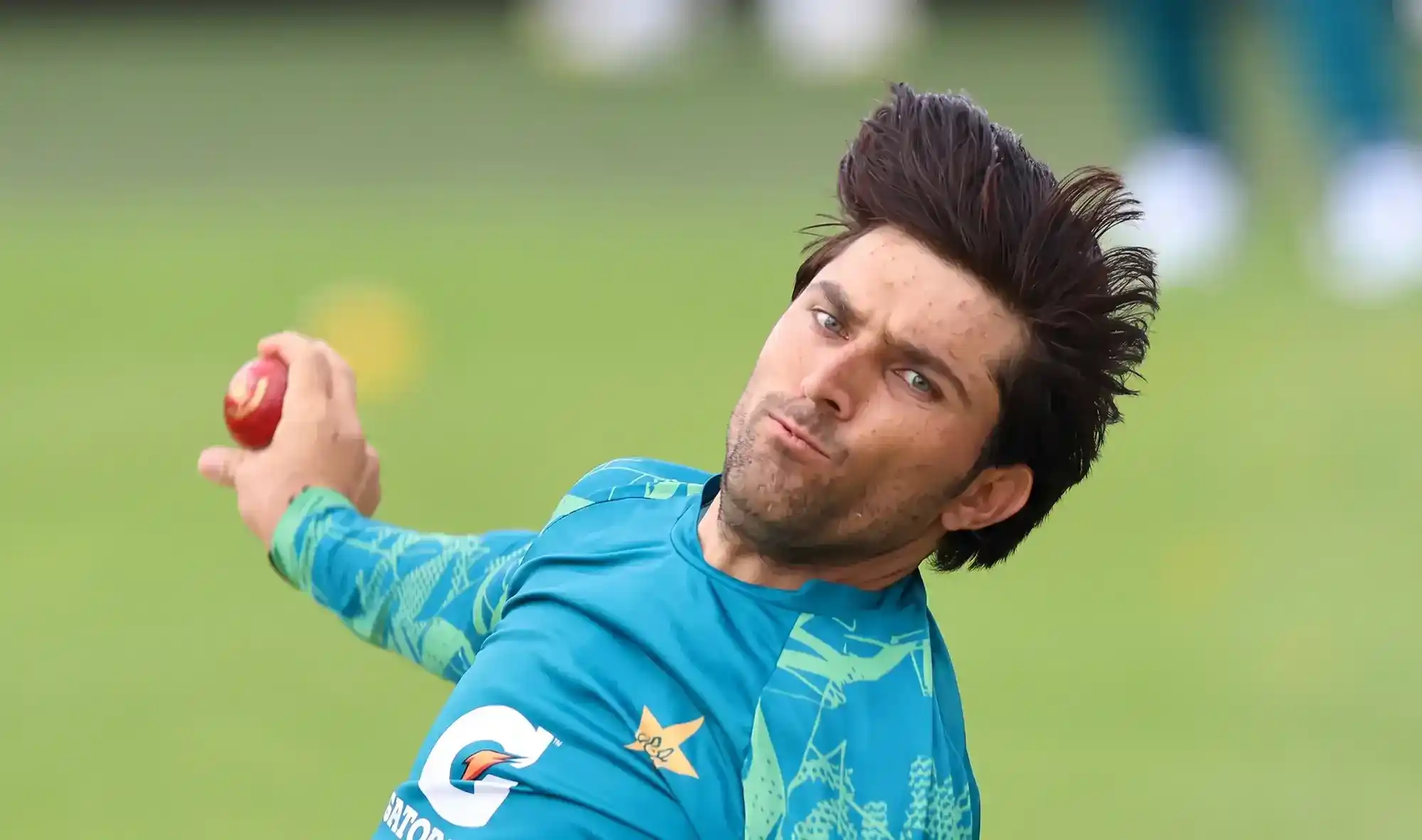
What Protection Does a Fast Bowler Actually Need?
28 Aug 2026
Do You Actually Need a Cricket Arm Guard?
28 Aug 2026
Why Your Helmet and Neck Guard Are Crucial
22 Aug 2026
How to Replace a Cricket Bat Grip?
12 Aug 2026
The Role of Carbon Fiber in Modern Cricket Bat Handles
30 Jul 2026
How to Knock In a Cricket Bat Properly: A Step-by-Step Guide
23 Jul 2026
Cricket Bat Grains Explained: What 5, 7, and 10 Grains Really Mean